The crisis is a crisis of consciousness.
“Of what we pay attention to, what we consider worth wanting, and how honestly we live with what we know.” — Lakshay Vaishnav, SatyaYuga Geeta and Kalki Darshan
“There are two curves rising through our century. One is our capability. The other is our capacity to use it well.”
Why this book exists · p. 7“You cannot engineer your way out of a problem whose engine is unlimited wanting. Nor can it be purely spiritual: private serenity does not decarbonise an economy or reform a law. What is needed is a bridge — a way of thinking that takes inner life seriously as a civilisational force, and takes evidence seriously as a discipline.”
The question the whole framework is built around:
“Can humanity transform its consciousness before the consequences of its current way of living transform the planet beyond recognition?”
Chapter 1 · The Question We Cannot Ignore
One idea, spoken to every scale of life.
A government, a space agency and a single person at dawn face the same question at different sizes. Choose the door that matches where you stand.
 For governments & institutions
Earth & Governments
Give the absent a voice: rivers, future generations, the ungraded hour in schools, and an honest Earth 2050.
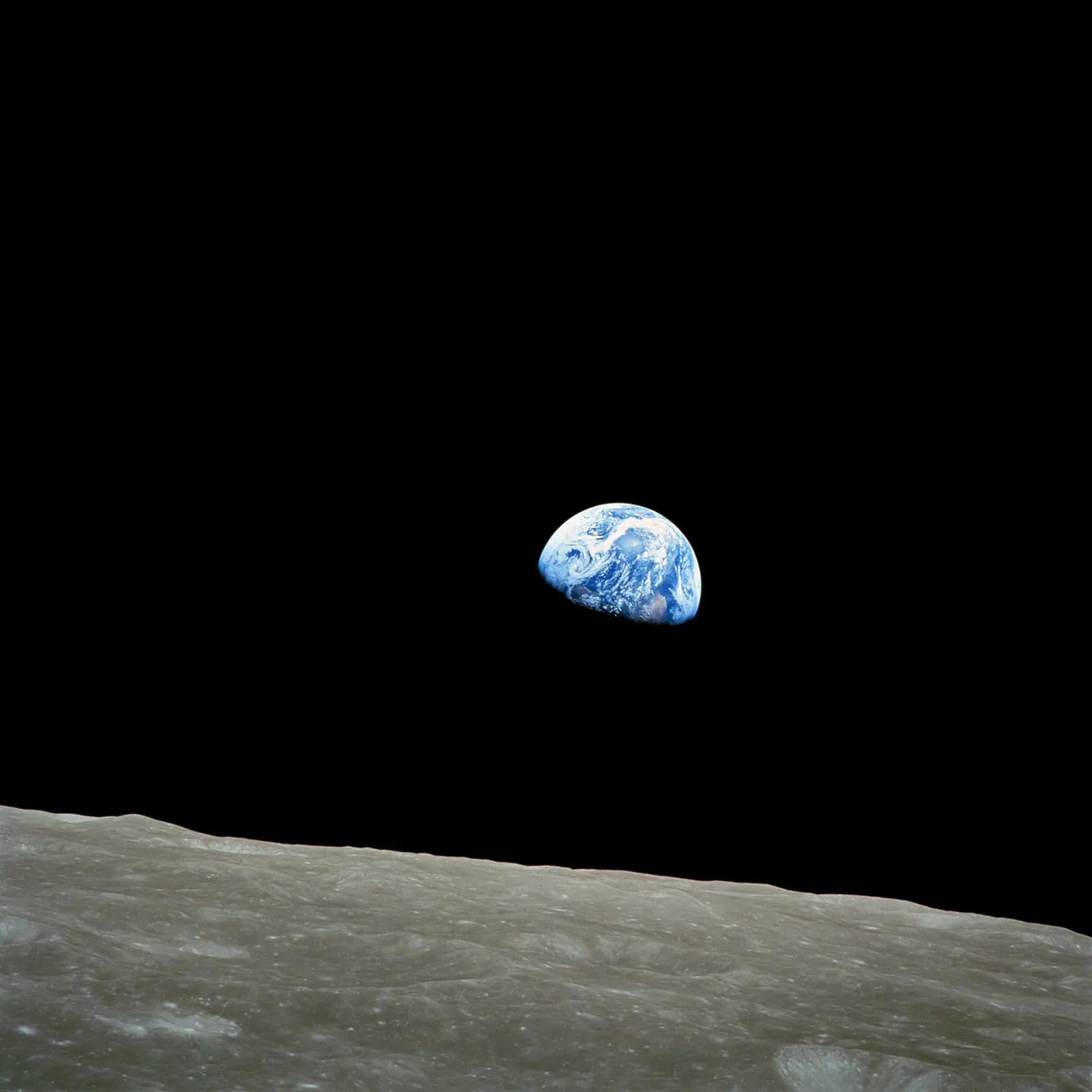 For NASA · ISRO · SpaceX
Beyond Earth
“The engineering is hard and will be solved. The question is who arrives.”
 For every human
The 30-day truth practice
Take one principle. Hold it for thirty days. Free, private, on your phone.
 For seekers
Krishna & Kalki
Inner states of truth, discernment and correction. “Cut the pattern. Leave the person standing.”
For anyone with a questionAsk SatyaYuga AI
Ask about anger, AI, Mars or meaning, and get his own words back, with the source.

Ask anything. Hear it in his own words.
One guide across everything Lakshay has written: the newest edition, the original edition, the Hindi edition and his Mars essay. Every answer is one of his passages, with its source.
- Searches 1,700+ passages, in English and हिन्दी
- Each page has its own guide too: Earth & Governments, Space, For All Humans, Krishna & Kalki
- Runs on your device. Nothing you type leaves your browser
SatyaYuga is not a date. It is the absence of a gap.
“A condition in which what a person holds inwardly, says outwardly and does in the world are one continuous thing — sustained not by enforcement but because nothing else is being attempted.”
Chapter 13 · What SatyaYuga Means Here
“A date cannot be changed. A condition can be treated. And a condition, unlike a date, does not have to be uniform: one person, one household, one institution can be living in a different age from the one around it.” — Chapter 2
Tap the circles to separate them again.
Karma equals awareness times intention times action
“Any factor at zero collapses the product.” Awareness without action is decay; action without awareness is damage; intention without either is sentiment. “Karma, on this reading, is not only personal. It is planetary, and it is legible.”
Chapter 9 · Karma Begins as Intention · Sutra 27
Spiritual conviction and evidentiary discipline, kept apart.
“Much of the confusion in writing that joins spirituality to science comes from mixing registers — presenting a metaphor as a measurement, or an interpretation as a scripture. This book keeps them apart.”
Traditional belief
What a scriptural or Puranic tradition holds, reported as such.
“In the traditional understanding…”Philosophical interpretation
A reading of a tradition, argued for rather than asserted.
“One way to understand this is…”The author’s own position
Original formulations and models. Proposals, not doctrine.
“In this book…”Contemporary evidence
Findings from science and monitoring bodies, attributed to their source.
“According to [source]…”Speculation
Thought experiments about futures. Imagination doing serious work.
“A thought experiment…”“No sentence in this book is attributed to a historical or spiritual figure who did not say it.” · A note on language and evidence, p. 9
Start at the scale you actually operate at.
“Not at the largest one, which is where good intentions go to die.” Each step is small enough to begin this week. — Chapter 45
An individual
Take one principle and hold it for thirty days. One. When you fail — you will — note it without commentary and continue.
A household
One hour a week in which nothing is consumed and no screen is on, and one meal at which everyone is present.
A community
Adopt something physical and shared — a stretch of water, a set of trees, a public space — and take responsibility for its condition, publicly.
A school
One ungraded, unproductive hour a week, from the first year to the last. Two per cent of instructional time, twelve years of compounding.
An organisation
Publish one cost you currently do not count. Ask of every significant decision: who bears the cost of this, and were they in the room?
A technology team
State your objective function in plain language where users can read it. Measure whether people report their time with you was worth spending.
A city
Choose one measurable target with a date — canopy cover, absorbed rainfall, distance to daily needs on foot. Publish it annually.
A society
Give the absent a voice with legal standing — future generations, watersheds, ecosystems. Make the deferral visible.
“You cannot argue an age into existence, and you do not have to wait for one.”
“The only available lever is conduct. Don’t preach the golden age; occupy it.” — Chapter 17